Security cameras, surveillance & smart home · Denver metro and the Front Range Find your city ↗ Call (720) 487-1226
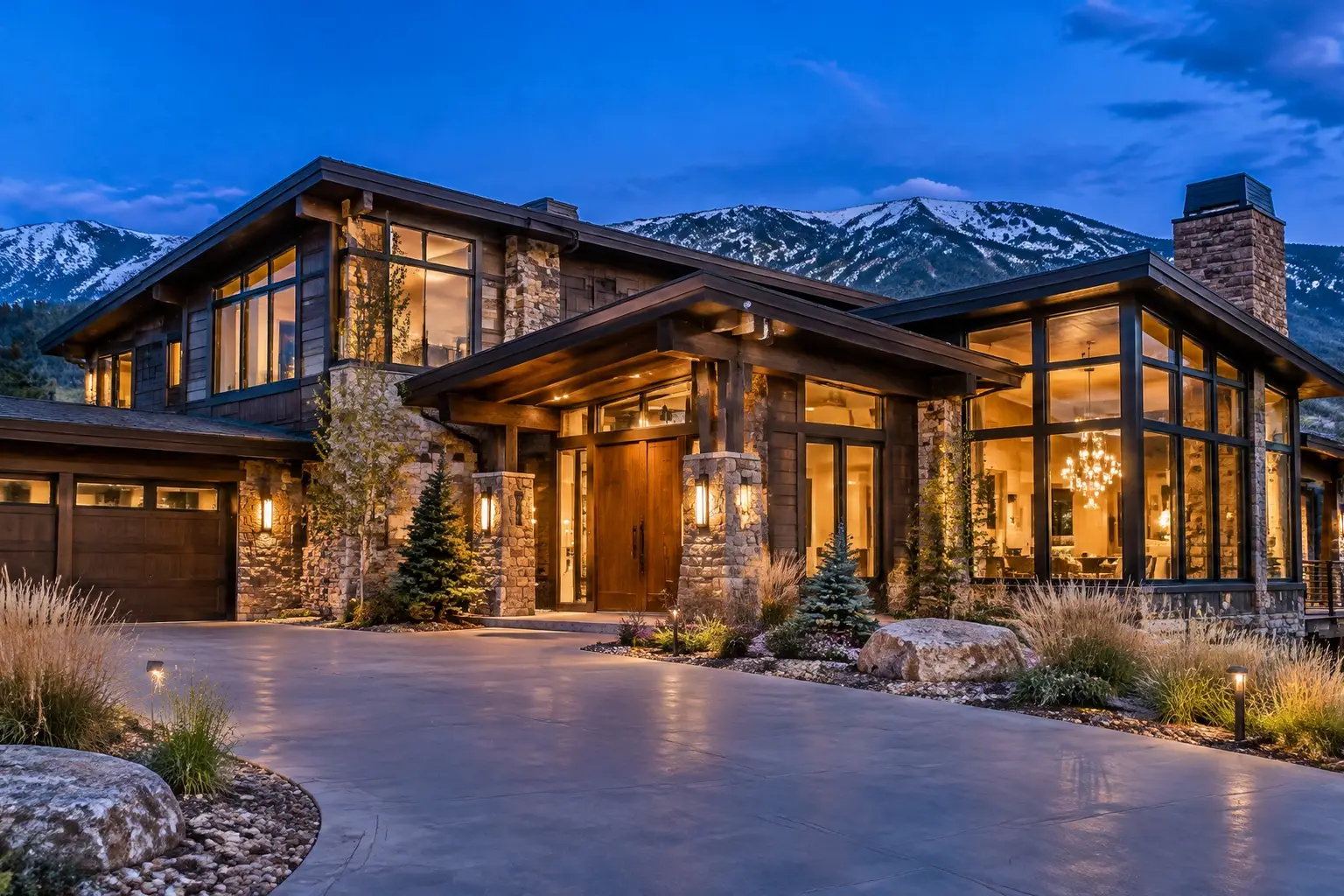
Large stone and timber Front Range home at dusk, warm lit windows, with an exterior security camera above the entry

ROOMS YOU ACTUALLY USE

Home Audio Video Systems in Denver, CO

Distributed audio and video is about matching what gets installed to how a household lives. Speakers in the kitchen and on the patio get used daily. A seven-room system with a control app nobody opens does not. Across the Denver metro the pattern is consistent: kitchen, living space, primary bedroom, patio or deck, and often a basement or shop. We wire those well, keep the control simple, and plan for Colorado weather on anything outdoors.

Planned on the propertyEntries and sightlines firstWritten scopeCabling, zones and retention agreed
Your property. Watched properly.Request form

Request a quote

A little about the property and what you want covered.

Your inquiry goes to our team. Sending a request does not schedule an installation; we will follow up about the property, the scope and availability.

§ 01 / The details

Start with a clear scope.

Use these items to frame the conversation. Final inclusions depend on the property, the existing wiring and the agreed plan.

  • A room-by-room list of which spaces genuinely earn speakers
  • Background versus active listening decided per room
  • In-ceiling, in-wall or bookshelf speakers chosen by room use
  • Amplifier channels and zones sized for the actual room count
  • Wired network drop and power behind every display position
  • Conduit or pull strings in walls being closed during a remodel
  • Equipment location chosen for ventilation and access
  • Weather-rated outdoor speakers mounted under eaves or in soffits
  • Outdoor zones set up with volume limits that respect neighbours
  • Plain zone naming, presets and keypads in the most-used rooms
  • A household handover with someone else operating the system

§ 02 / The system

Which rooms earn speakers

The honest list is shorter than the catalogue suggests. Kitchens and open living areas are used constantly and benefit most. A patio, deck or pergola is the one that surprises people with how much it gets used here, given how many evenings are spent outside. Primary bedrooms, home offices, basements, home gyms and garages or shops come next, depending on the household.

In-ceiling speakers suit kitchens and open plans because they disappear and spread sound evenly. In-wall or bookshelf speakers suit a room where someone sits and listens. Each room needs a decision about whether it is background sound or something you actively listen to, because that changes the speaker, the amplifier channel and the budget. We would rather do four rooms properly than eight thinly.

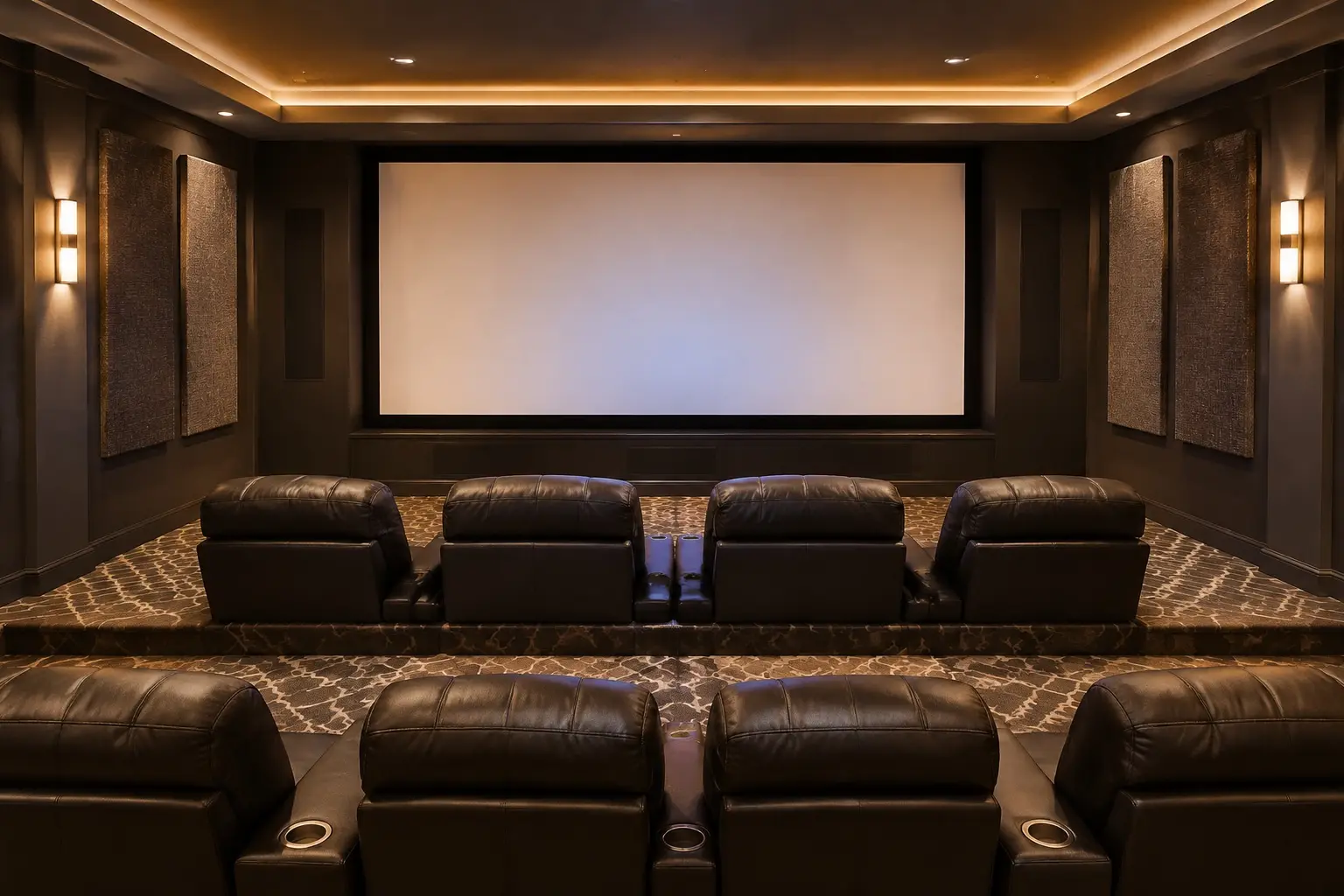
A home theater room with tiered leather seating facing a large projection screen and acoustic wall panels

§ 03 / The details

Video around the house, done simply

Video distribution has got simpler and the honest advice has changed with it. For most homes, a good display with a streaming device at each location, on a solid wired network, beats a complicated matrix of sources sent around the building. Where a shared source genuinely matters, or where displays are in places that cannot take a device, distribution still earns its place.

What consistently matters is the plumbing: a wired network drop behind every display, power where the display goes, conduit or a pull string in a wall you are going to close up, and a plan for where equipment lives so it is ventilated and reachable. Outdoor televisions need to be rated for it, placed out of direct sun, and treated as the harder install they are. A living-room display mounted over an unused cable outlet with no network drop behind it is the single most common avoidable annoyance we are called to fix.
§ 04 / The system

Outdoor audio, neighbours and the weather

Outdoor sound is a different engineering problem. Speakers need to be genuinely weather-rated for hail, UV at altitude and a freeze-thaw cycle, mounted under an eave or in a soffit where possible, and powered by an amplifier with the headroom to drive them without strain in open air where there are no walls to help.

It is also a neighbour problem, especially on the typical metro lot where houses are close. Several smaller speakers at lower volume carry conversation-level sound across a patio far better than two loud ones, and they keep the sound on your property rather than three gardens away. Landscape and in-ground speakers can work well in a larger yard with planted beds. We also set sensible volume limits and zone the patio separately so an evening outside does not fill the whole house.

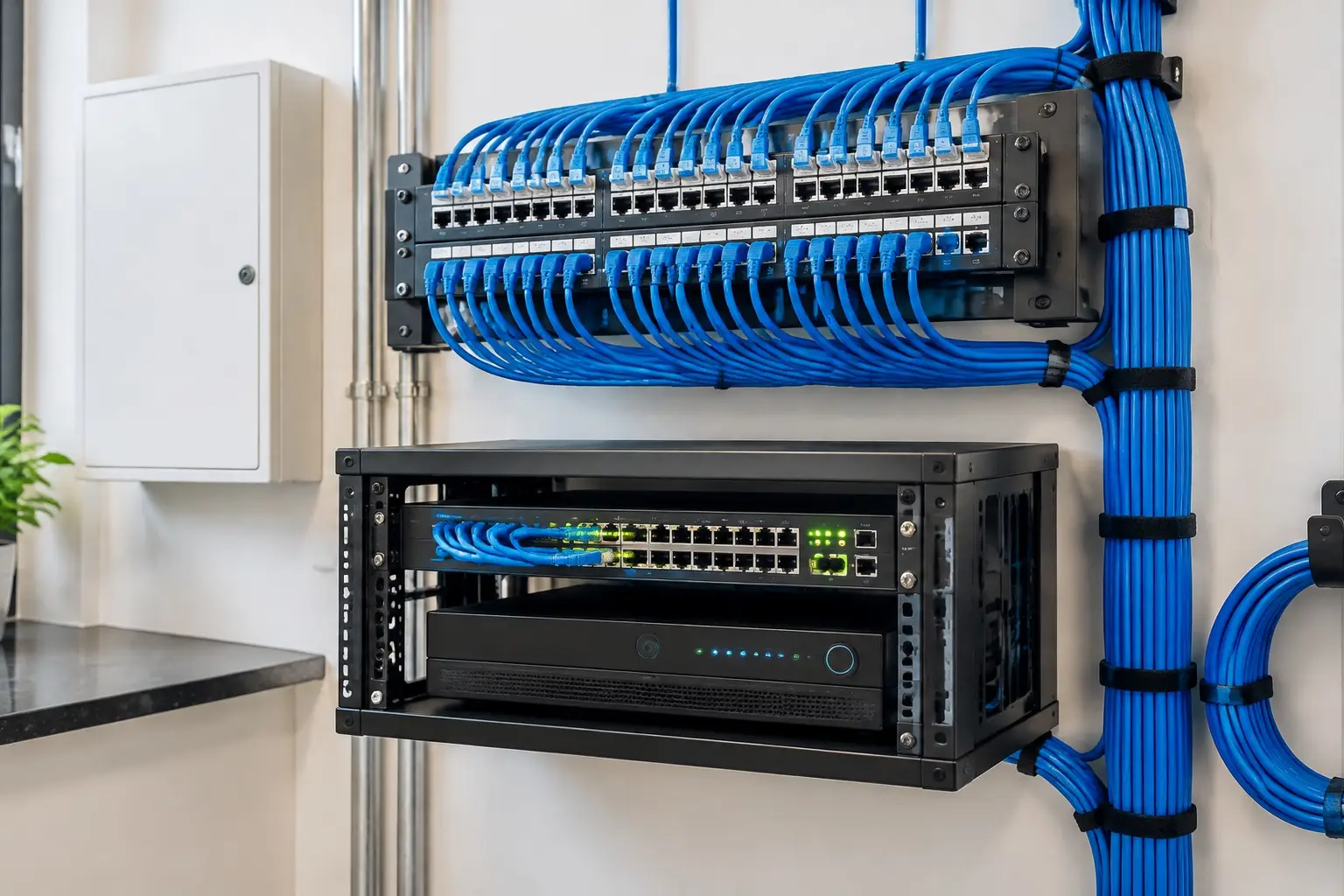
A structured wiring panel with labelled network cables feeding a switch and a video recorder

§ 05 / The details

Control that the whole household can use

The control layer is where distributed audio systems succeed or fail. One app that handles volume and source per zone, physical controls or keypads in the rooms used most, and names that mean something to the family. If choosing music in the kitchen takes four taps and a guess, people will use a portable speaker instead and the installed system becomes expensive decoration.

We set up presets for the things that happen daily, keep the zone names plain, and make sure the system degrades gracefully: a zone should still play when the hub, the app or the internet is unavailable, through local playback or a direct input. And we hand over with someone else in the household driving it, because that is the only reliable test that it is simple enough.

§ 06 / Common questions

The questions
worth asking first.

Clear answers before anyone drills a hole. Start with what homeowners ask most.

More answers ↗

Do I need speakers in every room?

No, and systems designed that way tend to be used in three rooms anyway. We start from where you spend time: usually the kitchen and living space, the patio, the primary bedroom, and a basement or workshop. Four well-done zones beat eight compromised ones for the same money.

Are in-ceiling speakers worth it over a portable speaker?

For daily background listening in a kitchen or open living area, yes: even coverage, nothing to charge, nothing on the counter, and no bluetooth handoff every time someone walks in. For a room where you sit and listen critically, a pair of proper speakers at ear height will do more.

Can outdoor speakers survive a Colorado winter?

Properly rated ones, mounted sensibly, yes. The combination that kills outdoor audio is a non-rated speaker, direct sun exposure and standing water in the housing. Under an eave or in a soffit, with rated cable and a good connection, outdoor speakers last years here.

Should I distribute video or put a streaming box at each TV?

For most homes, a device at each display on a wired network is simpler, cheaper and easier to live with. Distribution makes sense when a source genuinely has to be shared or a display is somewhere a device cannot go. We will say which case you are in rather than selling the bigger system.

Can you work with the speakers and amplifier I already have?

Usually, and existing in-wall speakers or speaker cable in the walls are often the valuable part. We test what is there, say what is worth keeping, and reuse the cabling wherever it is in good condition and correctly routed.

§ 07 / The details

Local installation. Metro-wide planning.

Choose your area for the local approaches, permit questions and covenant rules that come up there.

§ 08 / The details

Related systems for the same property.

A good system starts with the walk around the house.

Tell us about
the property.
And the blind spots.

The entries, the driveway, what the existing wiring can carry and what the covenants allow. Those four details shape a system worth paying for.

  • Say which approaches you cannot see today.
  • Tell us about existing cabling, panels or a prior system.
  • Agree the scope, the zones and the retention before work starts.
Your property. Watched properly.Request form

Start with your property

A little about the property and what you want covered.

Your inquiry goes to our team. Sending a request does not schedule an installation; we will follow up about the property, the scope and availability.

Cameras where they matter. Nothing you cannot use.

Know what
happens at
your door.

Call (720) 487-1226
Colorado Home Security · DenverCall (720) 487-1226
Your property. Watched properly.Request form

Before you go: want a camera plan?

A little about the property and what you want covered.

Your inquiry goes to our team. Sending a request does not schedule an installation; we will follow up about the property, the scope and availability.