Security cameras, surveillance & smart home · Denver metro and the Front Range Find your city ↗ Call (720) 487-1226
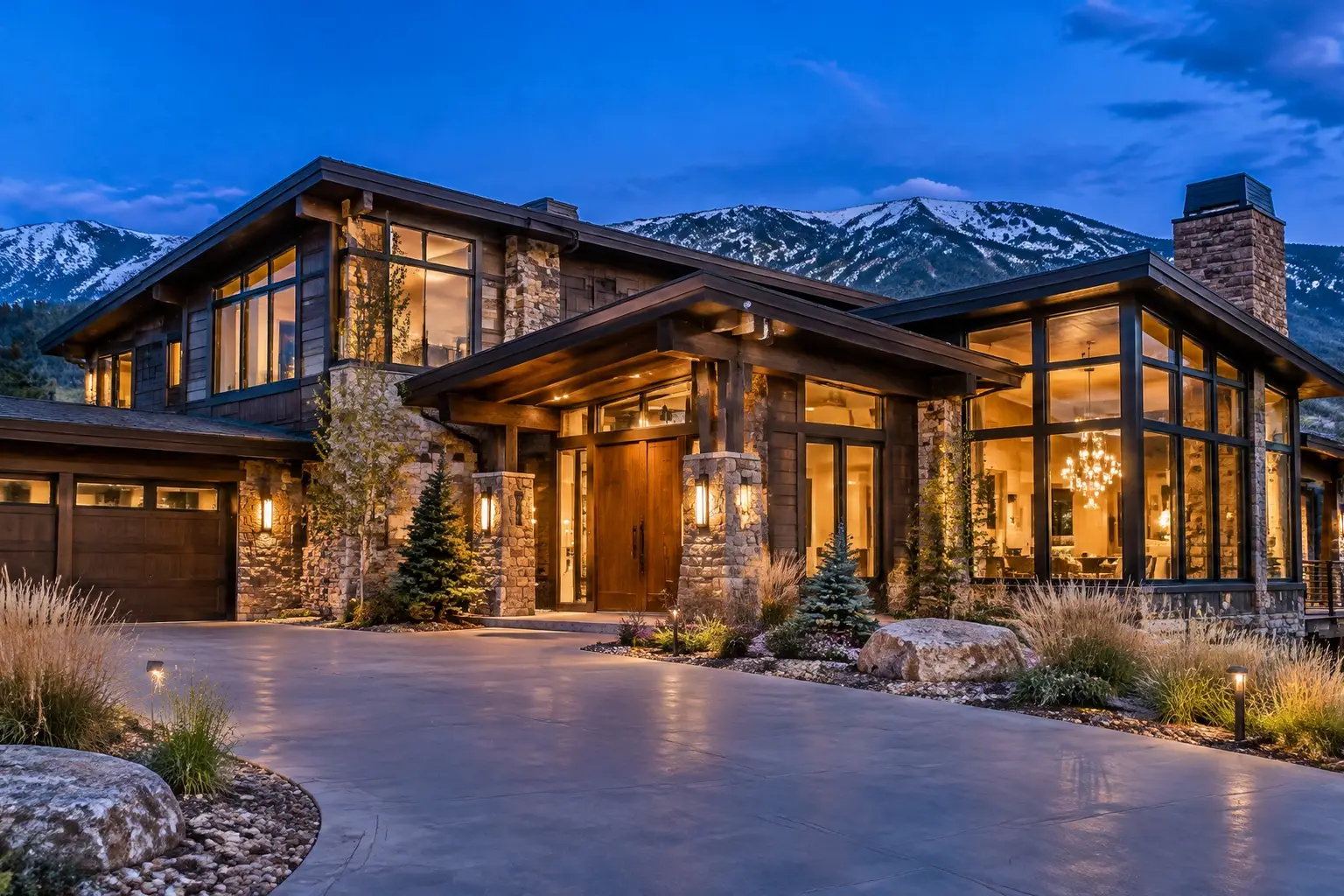
Large stone and timber Front Range home at dusk, warm lit windows, with an exterior security camera above the entry

MOUNTED, AIMED, CABLED

Security Camera Installation in Denver, CO

Most disappointing camera systems are not disappointing because of the camera. They are disappointing because it is mounted too high, aimed at a driveway it cannot resolve, pointed into the afternoon sun, or running on a battery and a marginal Wi-Fi signal through a brick wall. Installation is the part that decides whether footage is useful. We set positions for a usable view, run the cable where a feed has to hold, and size the recorder and network to match the camera count before anything is ordered.

Planned on the propertyEntries and sightlines firstWritten scopeCabling, zones and retention agreed
Your property. Watched properly.Request form

Request a quote

A little about the property and what you want covered.

Your inquiry goes to our team. Sending a request does not schedule an installation; we will follow up about the property, the scope and availability.

§ 01 / The details

Start with a clear scope.

Use these items to frame the conversation. Final inclusions depend on the property, the existing wiring and the agreed plan.

  • Positions set physically with a live view before permanent mounting
  • Height and angle chosen for face or plate identification at the distance that matters
  • Sun, porch-light and infrared conflicts checked at the position
  • Power over Ethernet cabling where a continuous feed is required
  • Wireless cameras where no practical cable route exists, with the trade-offs stated
  • Recorder type and drive size matched to the retention you choose
  • Switch and Power over Ethernet budget sized for the full camera count
  • Weather-rated mounting into solid material with sealed penetrations
  • Cable routes identified and quoted against the actual building
  • Labelled runs and a documented camera list at handover
  • A walkthrough of pulling and exporting a past clip, not just the live view

§ 02 / The system

Position decides everything the camera can do

Height and angle do more for identification than resolution. A camera eight feet up at the front door holds a face. The same camera on a second-story eave holds the top of a hat. A driveway camera has to be close enough and angled along the approach, not across it, if a plate is going to be readable rather than a bright smear at night.

Light matters as much as geometry. A camera facing west on a Colorado afternoon will struggle for an hour a day. A porch light directly in frame will blind the infrared and wash out the one view you cared about. A camera under a soffit stays out of the snow and the direct sun and keeps its lens clean, which is why that position is worth more than another megapixel.

We set positions physically, with the camera in hand and the live view on a screen, before anything is permanently mounted.

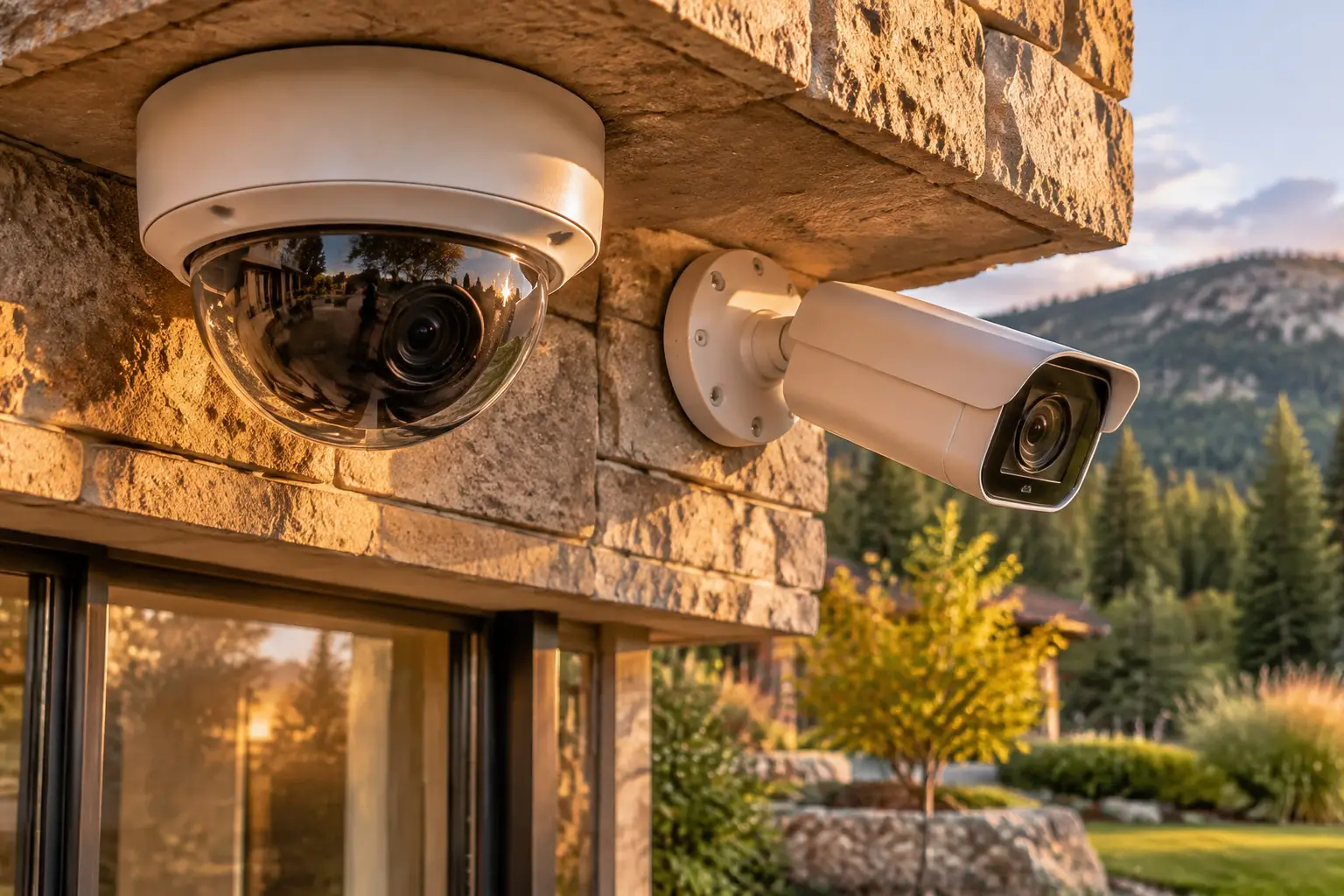
A dome camera and a bullet camera mounted under the stone eave of an upscale home, covering the same approach

§ 03 / The details

Wired, wireless, or honestly a mix

Wi-Fi cameras mount quickly, need no cable and depend on battery life, signal strength through whatever your exterior wall is made of, and your upload bandwidth. They suit a rental, a spot with no cable route, or a position you may move. Wired Power over Ethernet cameras need one cable back to a switch or recorder and in return hold a continuous feed, record locally, keep working when the internet drops, and never need charging.

Most houses end up with both: wired at the positions that matter most and have a route, wireless where the route does not exist. The important thing is to decide before any drywall, siding or trim work, because adding a cable later costs several times what it costs during an open wall. If the house is being remodelled or built, run cable to every plausible position even if the camera is a year away.
§ 04 / The system

What the system behind the camera has to carry

Cameras are the visible part of a load. Eight cameras recording continuously at high resolution need recorder storage sized for the retention you want, a switch with enough Power over Ethernet budget to run them all at once, and enough upload bandwidth if you also want remote viewing. Systems that drop feeds or overwrite footage after two days are usually fine cameras attached to an undersized back end.

So the quote covers the recorder type, the drive size against a stated number of days, the switch and its power budget, and where that equipment lives. A recorder in a hot closet with no airflow will fail early. One in an accessible, ventilated spot with battery backup will not, and will still have last Tuesday's clip when you need it.

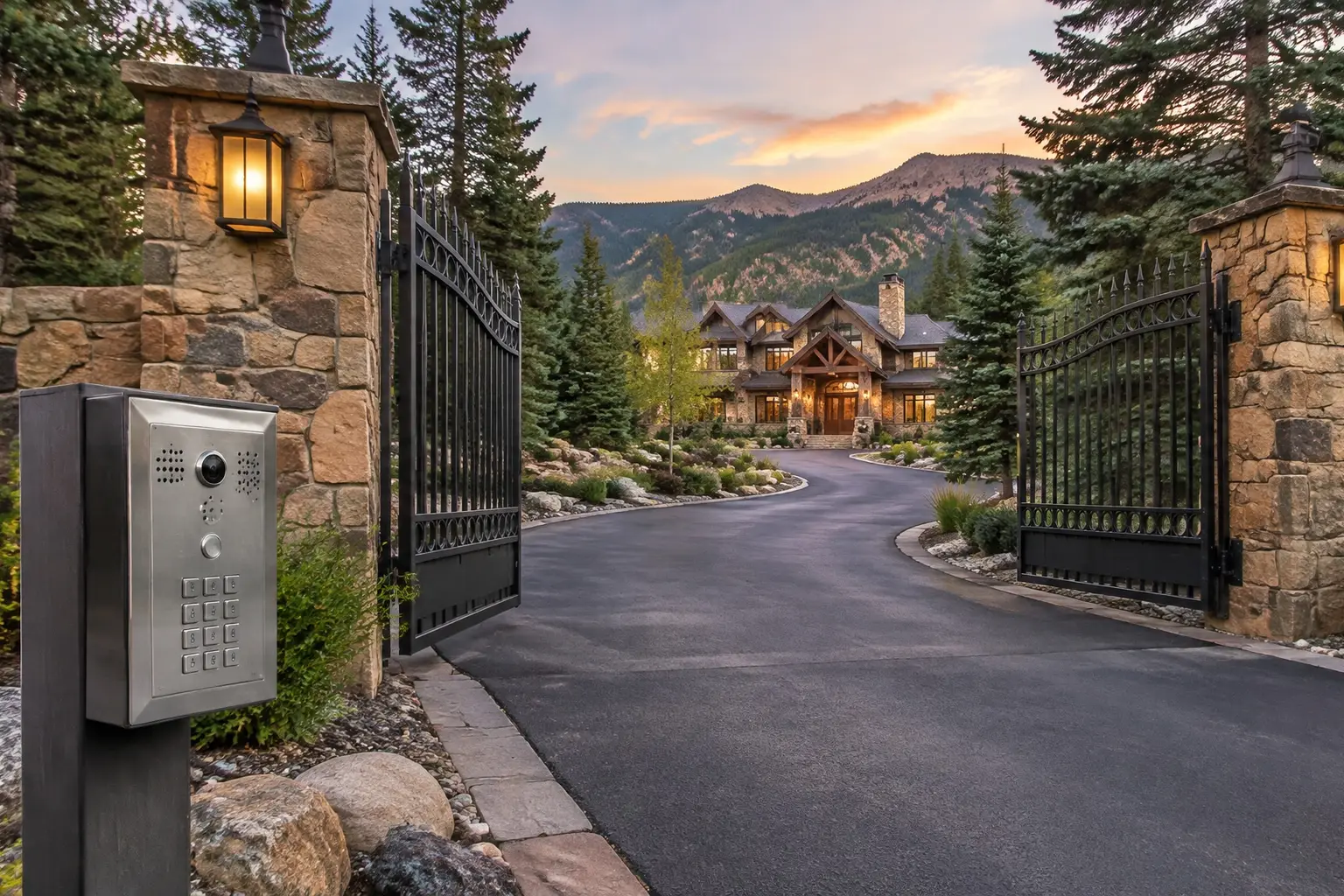
A gated private driveway entrance with stone pillars, an intercom keypad and a large home set back beyond the gates

§ 05 / The details

Cable routes, walls and the Colorado weather

The cost of a camera install is mostly the route. An unfinished basement or an accessible attic with soffit vents is straightforward. A two-story with no attic above the garage, stucco or full-brick exterior, vaulted ceilings or a finished basement ceiling is where time goes. We identify the hard routes during the walk so the quote reflects the building rather than an average.

Colorado adds its own tests. Mounts take wind and snow load, so they go into solid material with sealed penetrations rather than siding alone. Exterior cable gets a rated jacket and a protected path, not a staple run down a wall. Sun exposure and freeze-thaw cycling degrade cheap housings and gaskets faster at altitude than the spec sheet suggests, which is worth knowing before buying the lowest-cost camera available.

§ 06 / Common questions

The questions
worth asking first.

Clear answers before anyone drills a hole. Start with what homeowners ask most.

More answers ↗

How high should a security camera be mounted?

Low enough to hold a face, high enough to be out of easy reach: around eight to ten feet at an entry is the usual compromise. Above that, you capture the tops of heads and hats. On a second-story eave a camera becomes a context view of the yard, which is useful for seeing that something happened but not for identifying who.

Will cameras read a licence plate?

Only if one is positioned for it. A plate needs a camera reasonably close, aimed along the direction of travel rather than across it, with enough pixels on the plate and headlight glare managed at night. A general driveway overview will show you a car arrived; it will usually not give you the plate. If plate capture matters, it is a dedicated camera position.

Do I need to drill into brick or stucco?

Usually yes for a secure exterior mount, and that is routine work with the right anchors and sealing. The bigger question on brick, stucco and full masonry is the cable route, which often has to go through a rim joist, a soffit or an existing penetration rather than straight through the wall behind the camera. We work that out on site.

Can you use the coax or old cameras already on the house?

Sometimes. Existing coax can occasionally be reused for modern cameras with the right equipment, and existing conduit or cable pathways are often the valuable find. Older analog cameras themselves are rarely worth keeping once you see the difference in a side-by-side view, but we will tell you if yours are doing a job well enough to leave alone.

How many days of footage will I have?

That is a number you choose and we size for, not a fixed property of the system. It depends on camera count, resolution, frame rate, whether cameras record continuously or on motion, and drive size. Pick the retention you want first, including the realistic case of being away for two weeks, and the storage follows from it.

§ 07 / The details

Local installation. Metro-wide planning.

Choose your area for the local approaches, permit questions and covenant rules that come up there.

A good system starts with the walk around the house.

Tell us about
the property.
And the blind spots.

The entries, the driveway, what the existing wiring can carry and what the covenants allow. Those four details shape a system worth paying for.

  • Say which approaches you cannot see today.
  • Tell us about existing cabling, panels or a prior system.
  • Agree the scope, the zones and the retention before work starts.
Your property. Watched properly.Request form

Start with your property

A little about the property and what you want covered.

Your inquiry goes to our team. Sending a request does not schedule an installation; we will follow up about the property, the scope and availability.

Cameras where they matter. Nothing you cannot use.

Know what
happens at
your door.

Call (720) 487-1226
Colorado Home Security · DenverCall (720) 487-1226
Your property. Watched properly.Request form

Before you go: want a camera plan?

A little about the property and what you want covered.

Your inquiry goes to our team. Sending a request does not schedule an installation; we will follow up about the property, the scope and availability.